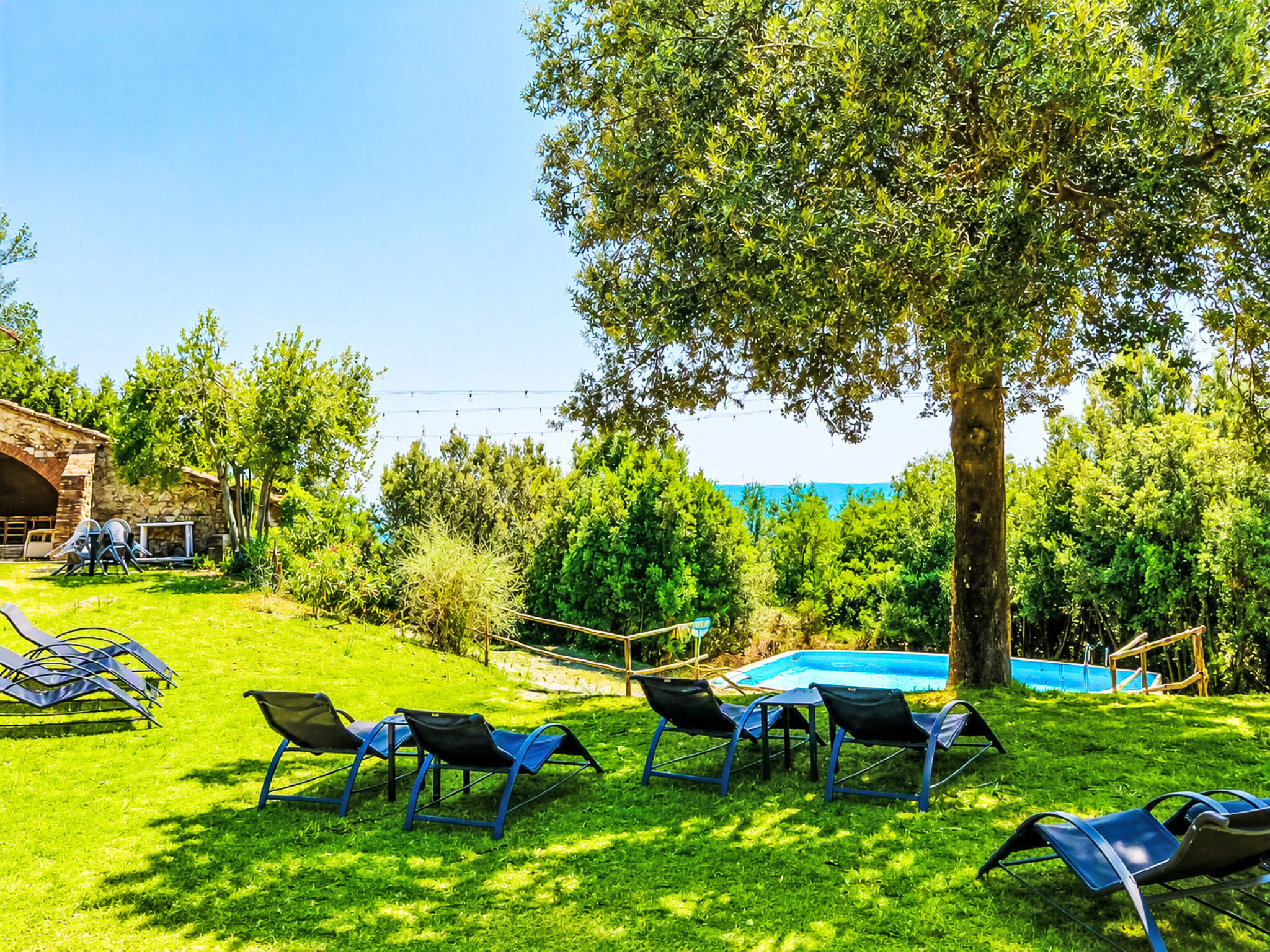
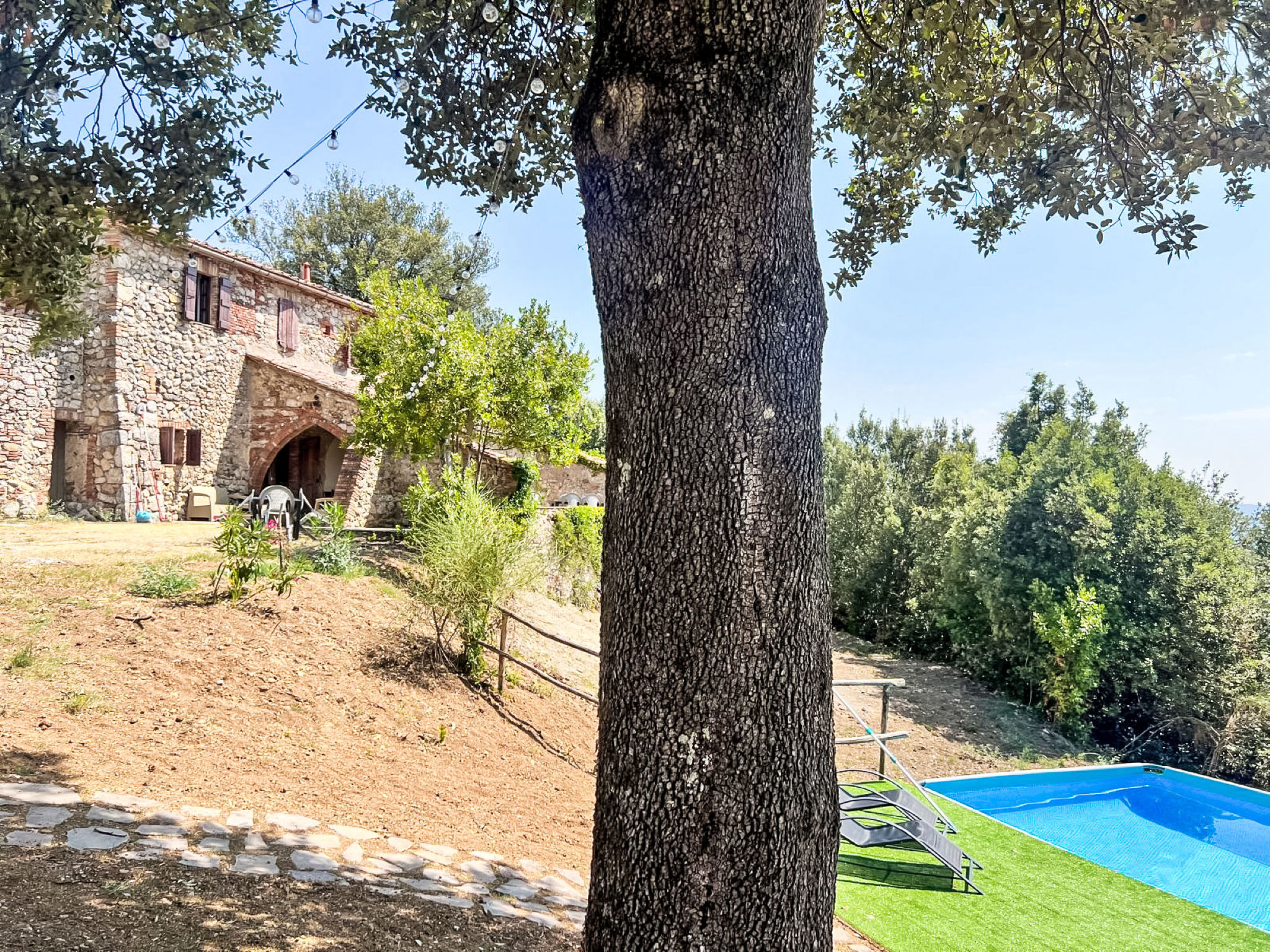
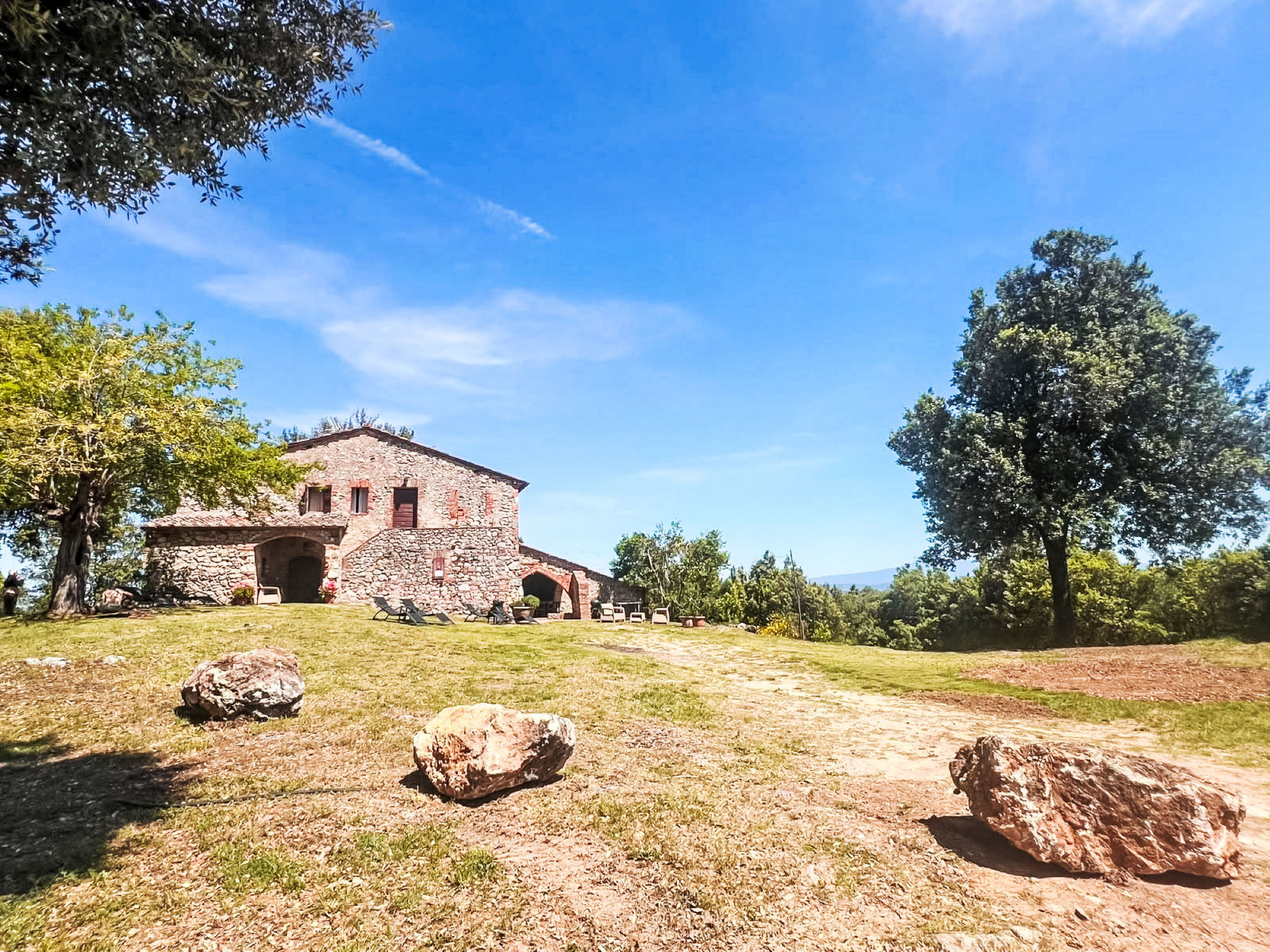
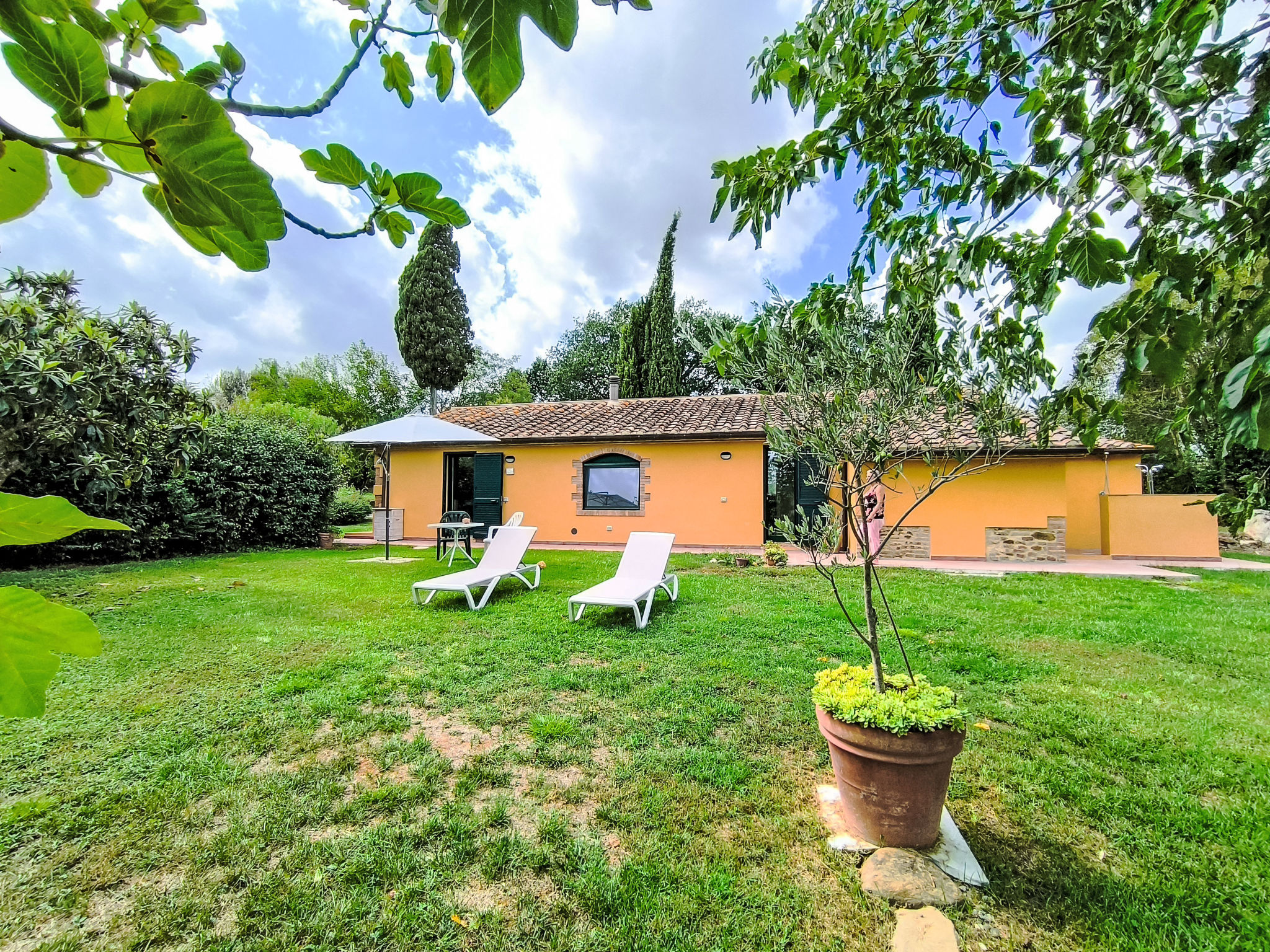
Volterra, Pomarance and Castelnuovo Val di Cecina (Val di Cecina)
Strictly speaking this is the Pisa side of the hills, north of the Maremma proper, but it has the most villas on this page. Volterra is a walled hill town with an Etruscan gate, a Roman theatre and workshops still carving alabaster. South of it the land empties out towards Pomarance and Larderello, where steam from geothermal vents drifts across the hills. Pisa airport is around an hour and a quarter away.
Best for: Sightseers who want a walled town with Etruscan and Roman remains
Not for you if: You want the Maremma's beaches close by: the coast at Cecina is around 45 minutes away.
Roccastrada, Sassofortino, Montieri and Boccheggiano (Colline Metallifere)
North-east of Grosseto, the Colline Metallifere are wooded hills once mined for copper and silver. Roccastrada sits on a rocky outcrop with views over the plain, and Sassofortino is higher and cooler. Montieri and Boccheggiano are further in, among chestnut forest, with Prata nearby. The beaches at Follonica and Castiglione della Pescaia are 40 minutes to an hour away. Pisa airport is about an hour and three quarters.
Best for: Walkers and anyone who wants cool woods and empty roads
Not for you if: You want shops and restaurants on the doorstep: these villages are small and some close early.
Civitella Marittima, Pari and Paganico (Val di Farma and Ombrone)
These villages sit where the Farma and Ombrone rivers leave the hills. The hot springs at Bagni di Petriolo, on the Farma, are free to use. Civitella Marittima and Pari are small hill villages with views across the oak woods, and Paganico is a walled village on the flat with shops and a petrol station. The Siena to Grosseto road runs past, so Siena is around 40 minutes away and Grosseto about 25.
Best for: River swimming, free hot springs and an easy central base
Not for you if: You want hilltop drama: Paganico sits on the valley floor by the main road.
Manciano, Saturnia, Semproniano and Roccalbegna
Manciano is a hill town with views to the coast and Monte Argentario. Below Saturnia, warm sulphurous water runs over limestone terraces at the Cascate del Mulino, which are free and open day and night, and there is a paid spa above. Semproniano and Roccalbegna are smaller villages further into the hills, the latter tucked under a rock. Rome Fiumicino is around two hours away.
Best for: Thermal pools and a base for southern Tuscany's hill towns
Not for you if: You want the free Saturnia pools to yourself: they are crowded on summer weekends.
Pitigliano
Pitigliano is built on a sheer cliff of volcanic tufa, and the classic view of it is from the Manciano road as you drive in. Its old Jewish quarter has a synagogue and museum. Around it, the Etruscans cut deep sunken roads, the vie cave, through the rock towards Sovana and Sorano. Lake Bolsena is about half an hour away. Rome Fiumicino is around two hours by car.
Best for: Seeing the tufa towns and Etruscan sunken roads
Not for you if: You want a flat stroll: Pitigliano's lanes are steep and the vie cave involve rough walking.
Scansano, Cinigiano, Arcidosso and Istia d'Ombrone (wine hills and Monte Amiata)
Scansano is the home of Morellino di Scansano, a Sangiovese red, and wineries line the roads around it. Istia d'Ombrone is a riverside village close to Grosseto. Cinigiano is in the Montecucco wine area to the north-east, and Arcidosso climbs the slopes of Monte Amiata, an extinct volcano with beech forests and a small ski area. Grosseto's beaches are 30 minutes to an hour away, depending on the village.
Best for: Wine lovers who want Morellino and Montecucco estates without the Chianti crowds
Not for you if: You want a single compact area: these villages are spread across a wide stretch of hills.