Dubrovnik, Mlini and Cavtat
Dubrovnik has the largest share of our villas in the region. Its old town is ringed by walls you can walk in full, and a cable car climbs Mount Srđ behind it. Mlini and Cavtat are smaller harbour towns to the south-east, with pebble coves and water taxis into the city. Ćilipi, by the airport, is a village in the Konavle wine valley. The airport is 10 to 20 minutes from Cavtat and around half an hour from Dubrovnik.
Best for: City sightseeing with a short airport transfer
Not for you if: You dislike crowds: cruise passengers fill Dubrovnik's old town on summer days.
Orebić, Viganj and Kučište (western Pelješac)
Orebić faces Korčula across a narrow channel, with a passenger boat to Korčula town in about 15 minutes and a car ferry to Dominče. Pebble beaches run along the shore, and Mount Sveti Ilija rises steeply behind, with a marked path to the top. Viganj and Kučište, a few kilometres west, are known for windsurfing and kitesurfing in the afternoon maestral wind. Lovište is a quiet bay at the peninsula's tip.
Best for: Windsurfers, walkers and day trips to Korčula town
Not for you if: You want a short transfer: it is around two hours by road from Dubrovnik airport.
Korčula town and the east of the island (Račišće, Zrnovo)
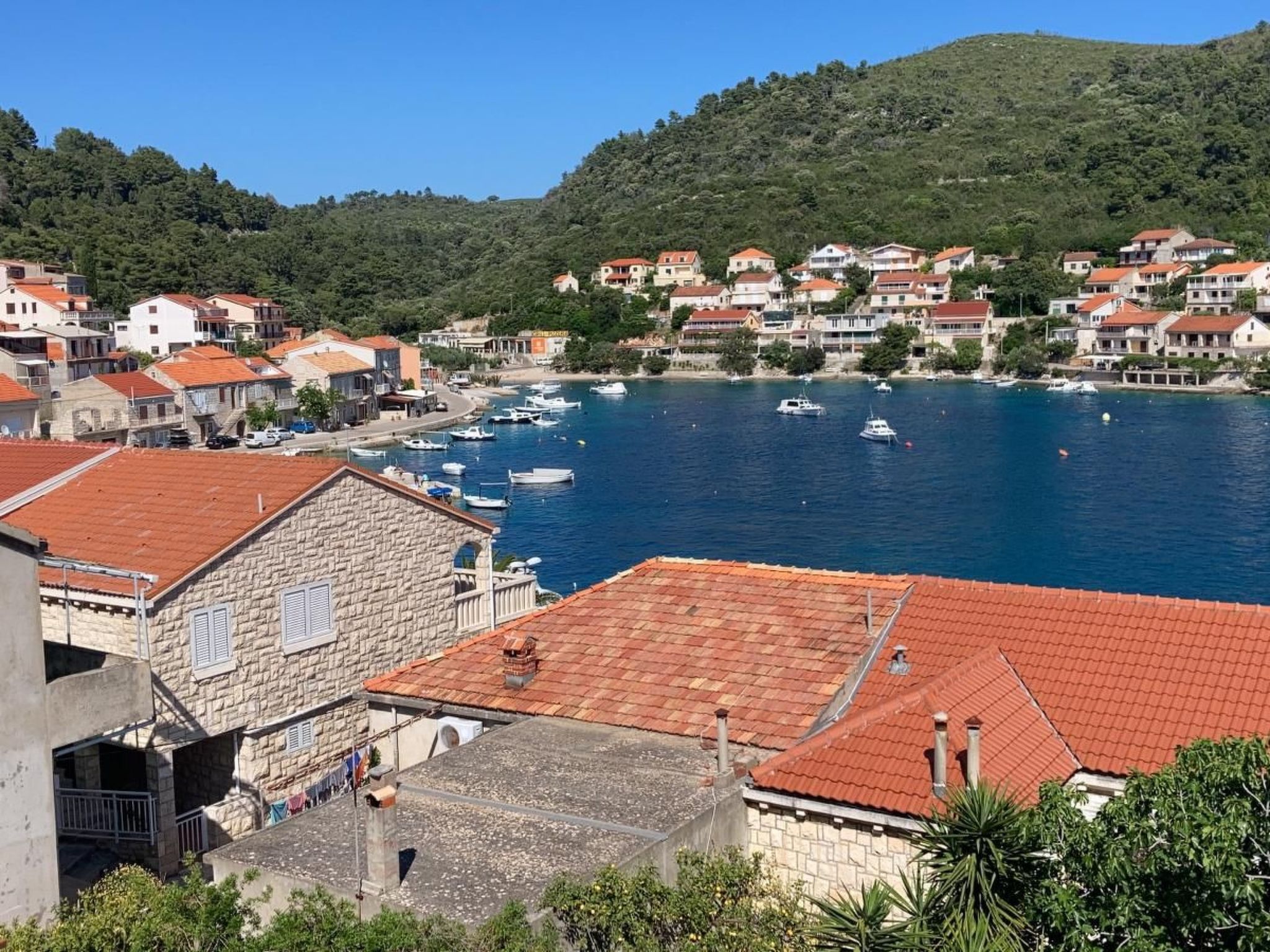
Korčula town packs stone streets onto a small peninsula, and the moreška sword dance is performed there through the summer. Zrnovo is a hill village just inland, and Račišće is a small harbour on the north coast at the end of a winding road. Lumbarda, nearby, grows the white grk wine. Allow two and a half to three hours from Dubrovnik airport, including the ferry from Orebić.
Best for: Couples who want a walled town, wine and harbour restaurants
Not for you if: You want sand: the island's beaches are mostly pebble and rock.
Vela Luka and the west of Korčula (Prigradica, Brna, Zavalatica, Smokvica)
Vela Luka sits at the end of a long bay, with the prehistoric Vela Spila cave above the town. Prigradica is a pebble cove on the north coast, while Brna and Zavalatica face south towards Lastovo. Smokvica is an inland wine village between them. A catamaran from Split takes about two hours and the car ferry around three, so Split airport can be the better choice for this end of the island.
Best for: Families who want quiet coves and a ferry link to Split
Not for you if: You want to reach Dubrovnik often: the far west of the island is a long drive from the city.
Ston, Trstenik and central Pelješac (Dingač, Žuljana, Putniković, Majkovi, Topolo)
Ston's defensive walls climb the hill above its salt pans, and Mali Ston, next door, is known for its oysters. Trstenik has a small harbour below the steep Dingač vineyards, where some of Croatia's best-known red wine comes from. Žuljana has a sheltered pebble bay. Majkovi and Topolo lie on the mainland near Slano. From Prapratno, ferries run to Mljet's national park in about 45 minutes. Dubrovnik airport is one to one and a half hours away.
Best for: Food and wine lovers who want somewhere quiet
Not for you if: You want shops and restaurants on the doorstep: these are small villages.
Klek and the Neretva delta (Blace, Rogotin, Ploče)
Klek sits on a sheltered bay facing Pelješac, beside the short Bosnian coastline at Neum. Since the Pelješac bridge opened in 2022, the drive to Dubrovnik no longer crosses that border. Blace and Rogotin are delta villages among mandarin orchards, and boat trips run through the reeds and channels. Ploče has a car ferry to Trpanj on Pelješac. Split and Dubrovnik airports are each around one and a half to two hours away.
Best for: Families on a budget and anyone flying into Split
Not for you if: You want an island or old-town atmosphere: this stretch is mostly modern holiday houses and farmland.