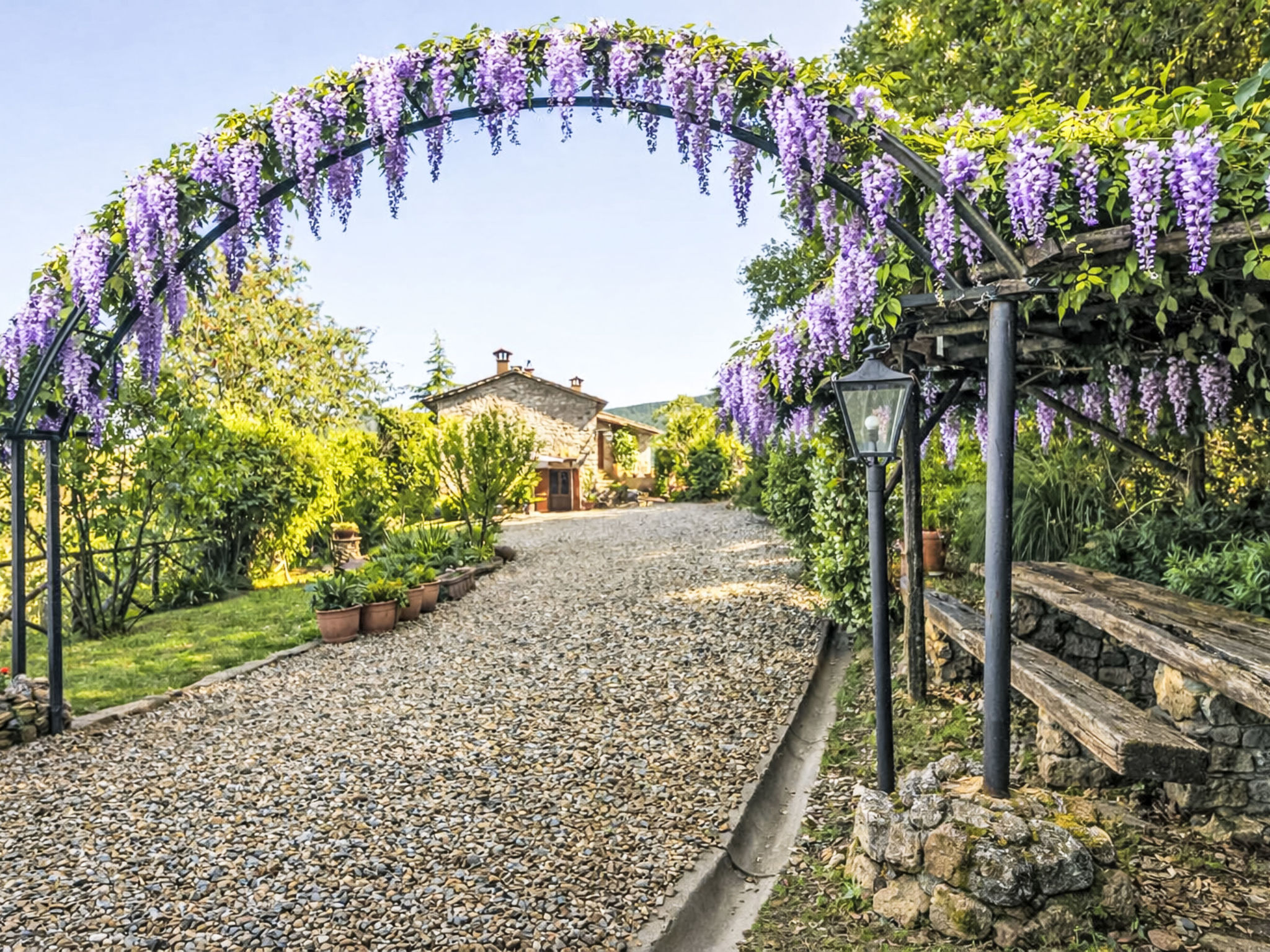
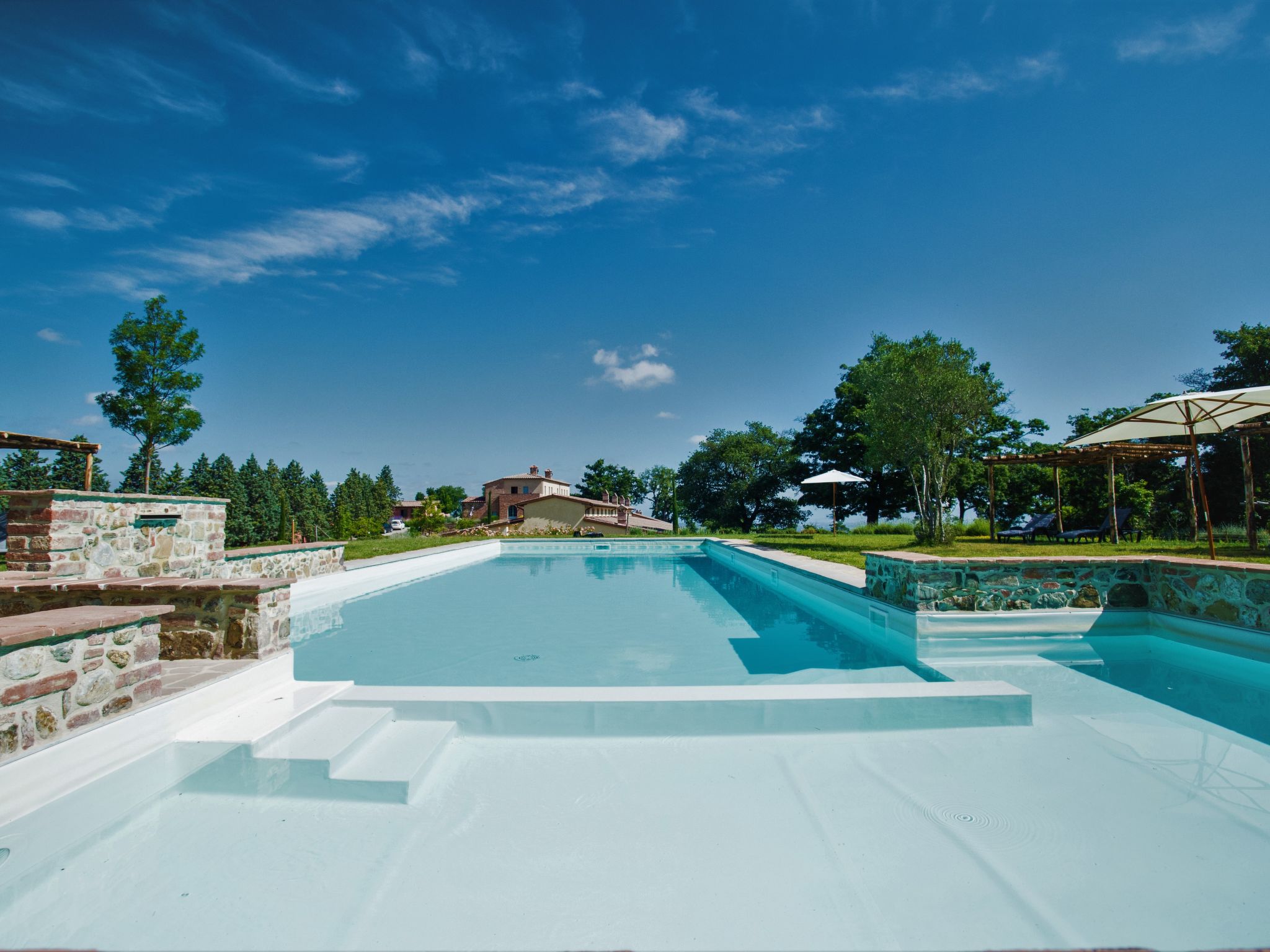
Siena, Sovicille and Monteriggioni (around the city)
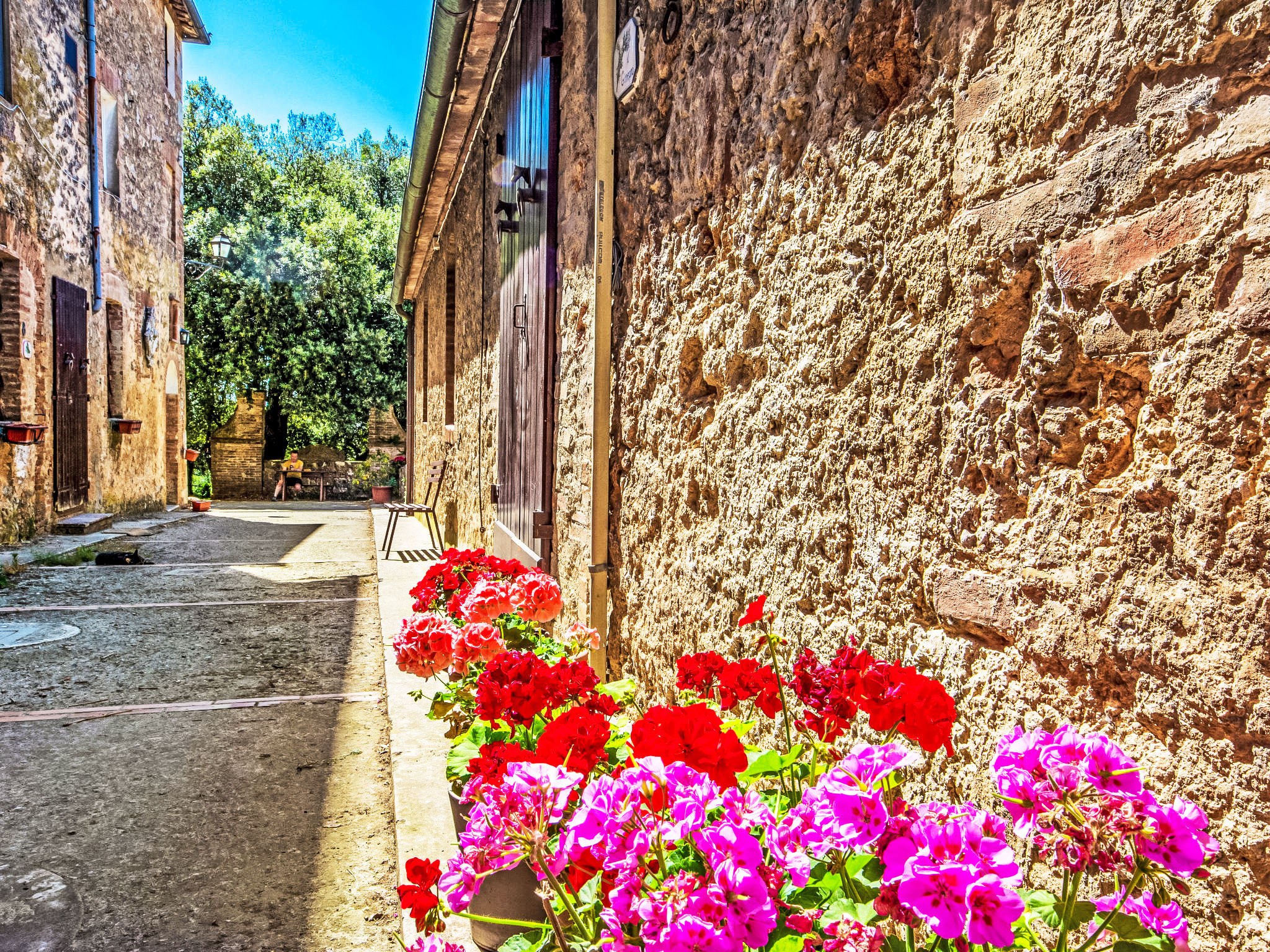
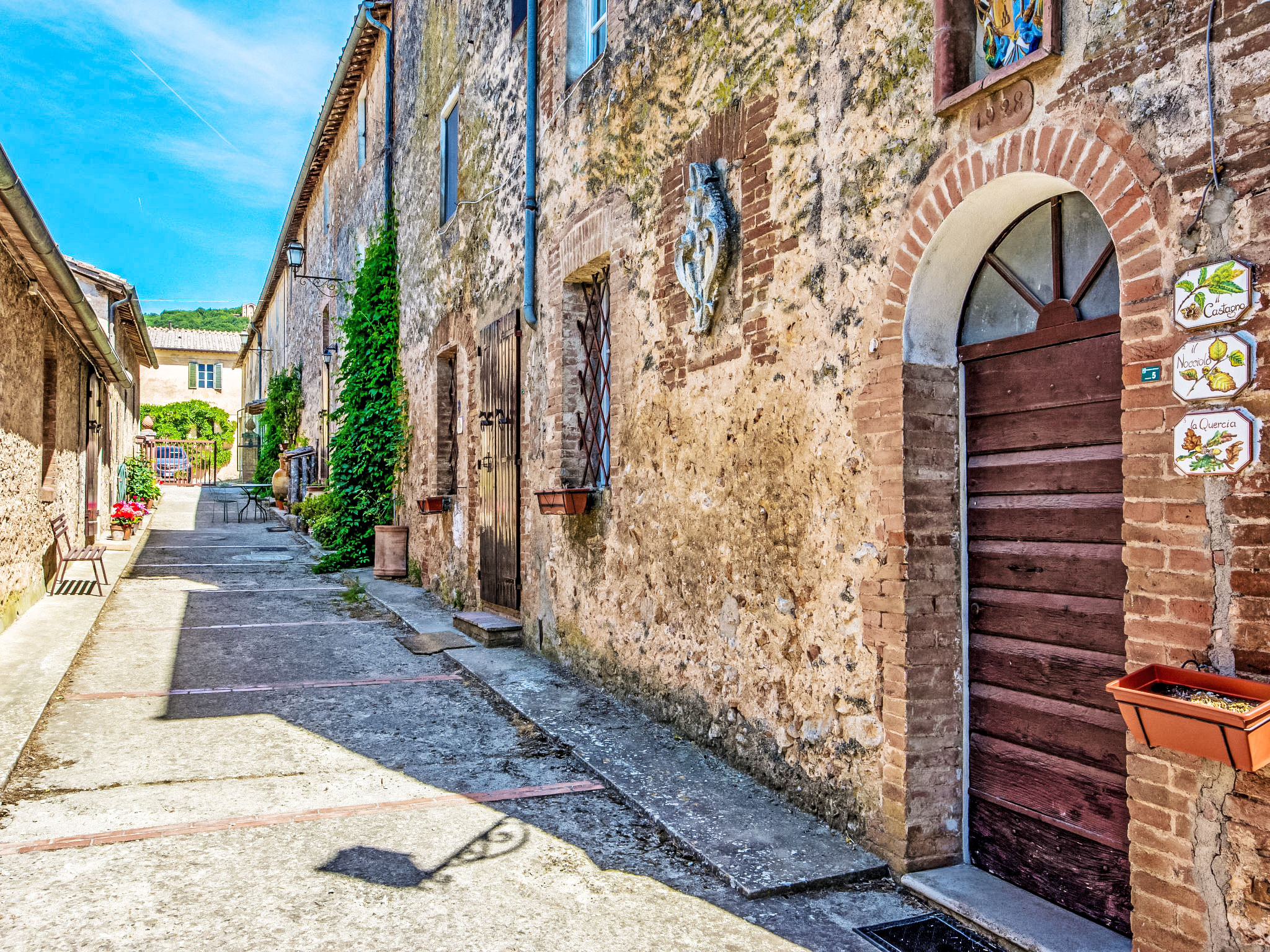
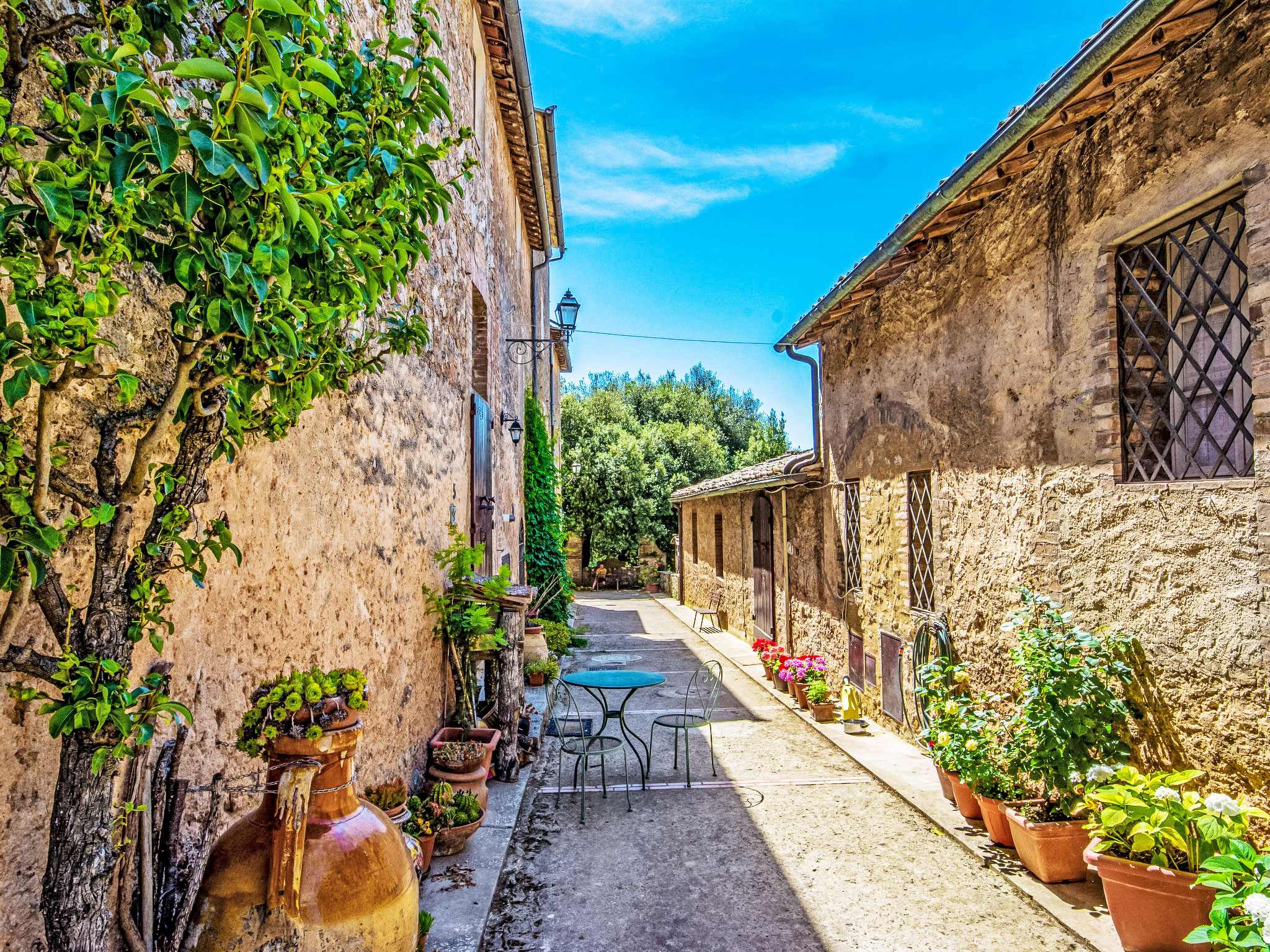
This is our largest group of villas. Sovicille sits on the wooded Montagnola ridge about 15 minutes west of Siena, with Romanesque parish churches in the hamlets around it. Monteriggioni, to the north, is a tiny village inside a complete ring of walls and towers. Siena's Piazza del Campo and cathedral are close enough for an evening visit. Florence airport is around an hour and a quarter away.
Best for: Sightseeing in Siena with countryside to come back to
Not for you if: You want vineyards around the house: the Montagnola hills west of Siena are mostly woods and olive groves.
Trequanda, Asciano and Buonconvento (Crete Senesi)
South-east of Siena, the Crete Senesi are rolling clay hills with lines of cypress along the ridge roads. The abbey of Monte Oliveto Maggiore has a cloister painted with the life of St Benedict and sits between Asciano and Buonconvento. Trequanda is a small walled village with a castle and little traffic. Buonconvento, on the main road south, has a station and shops. Florence airport is about an hour and a half away.
Best for: Photographers, cyclists and anyone who wants wide, empty views
Not for you if: You want shade and green fields in August: the clay hills turn bare and brown after the harvest.
Montalcino, Castiglione d'Orcia, Pienza and Radicofani (Val d'Orcia)
Montalcino is the home of Brunello, and estates on every side of the hill take visitors. Below it, the abbey of Sant'Antimo stands alone in olive groves. Pienza is a Renaissance planned town known for pecorino, and Bagno Vignoni nearby has a medieval thermal pool in its square. Radicofani's fortress looks south towards Lazio, and Abbadia San Salvatore is the way up Monte Amiata. Florence airport is about two hours away.
Best for: Wine lovers and the classic Val d'Orcia views
Not for you if: You want to avoid coach parties: Pienza and Montalcino are busy with day-trippers from spring to autumn.
Chiusi, Sarteano, Cetona and San Casciano dei Bagni (south-east)
Chiusi was an important Etruscan city, and its museum and painted tombs are worth a morning. The station is on the Florence to Rome line, which makes it the easiest place in the region to arrive without a car. Sarteano and Cetona are quiet hill villages, and San Casciano dei Bagni has hot springs used since Roman times. Lake Trasimeno is about 20 minutes away and Perugia airport roughly an hour.
Best for: Train travellers, thermal baths and a short drive to Umbria
Not for you if: You want to be close to Siena: it is over an hour away from this corner.
Torrita di Siena, Montepulciano, Sinalunga and Chianciano (Valdichiana senese)
Montepulciano is a long, steep hill town, and its Vino Nobile can be tasted in cellars cut into the rock under the main street. Torrita di Siena below is a small walled town with everyday shops, and Sinalunga has a station. Chianciano Terme is a spa town with large thermal pools. The A1 motorway runs along the valley, so Florence is around an hour and a quarter and Rome under two and a half hours.
Best for: Montepulciano's wine and a central base for touring
Not for you if: You want a hilltop view from every window: Torrita and Sinalunga sit near the flat valley floor and the motorway.
Chiusdino, Monticiano, Radicondoli and Murlo (Val di Merse)
South-west of Siena the countryside turns to oak and chestnut forest. Near Chiusdino, the roofless Gothic abbey of San Galgano stands in a field, with the sword in the stone in the chapel on the hill above. Murlo is a ring-shaped village with an Etruscan museum. The Merse and Farma rivers have pools for summer swimming. Siena is 30 to 45 minutes away, Florence airport around an hour and a half.
Best for: Walkers who want woods, rivers and very few visitors
Not for you if: You want restaurants within walking distance: villages here are small and spread out.