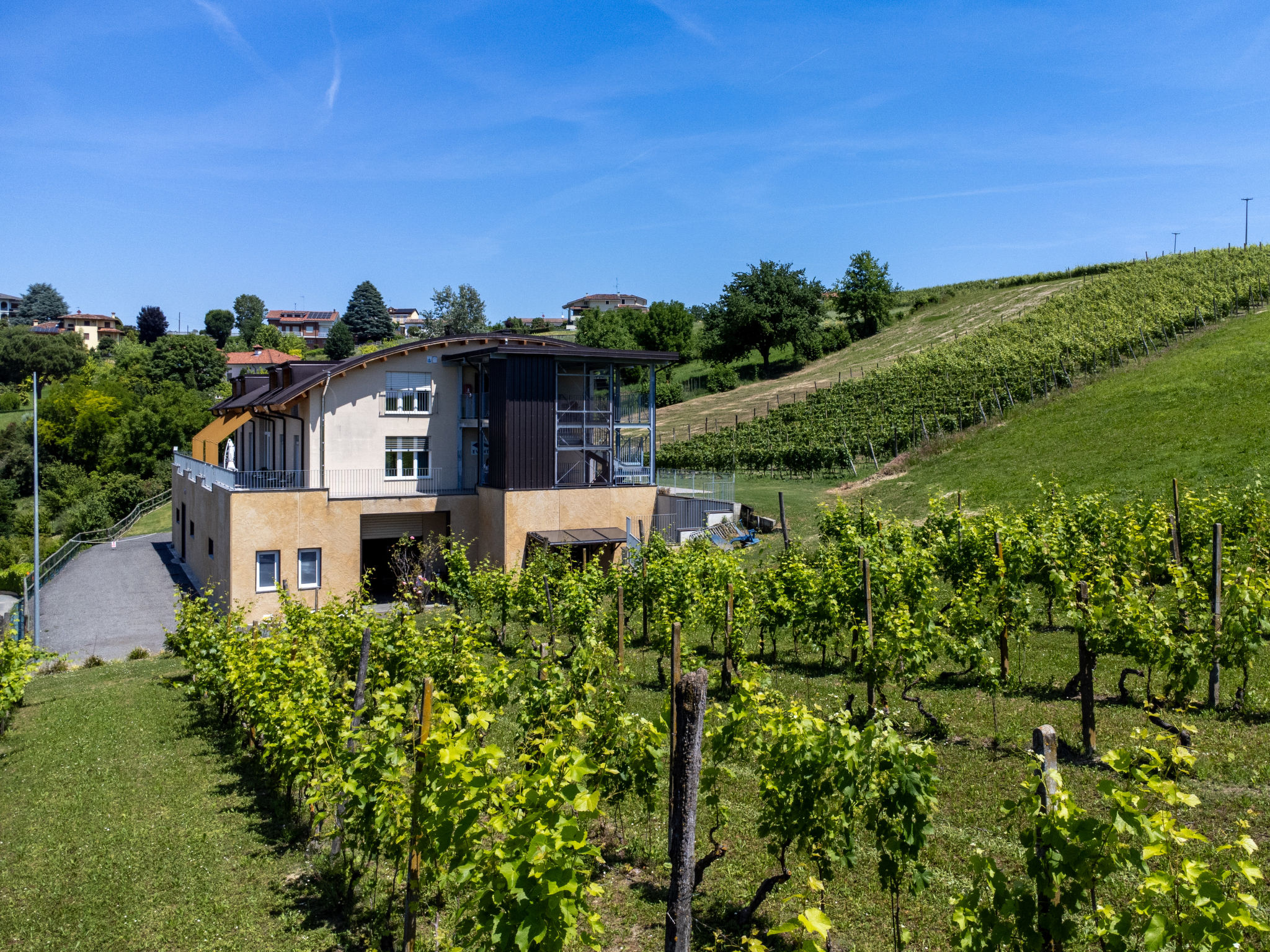
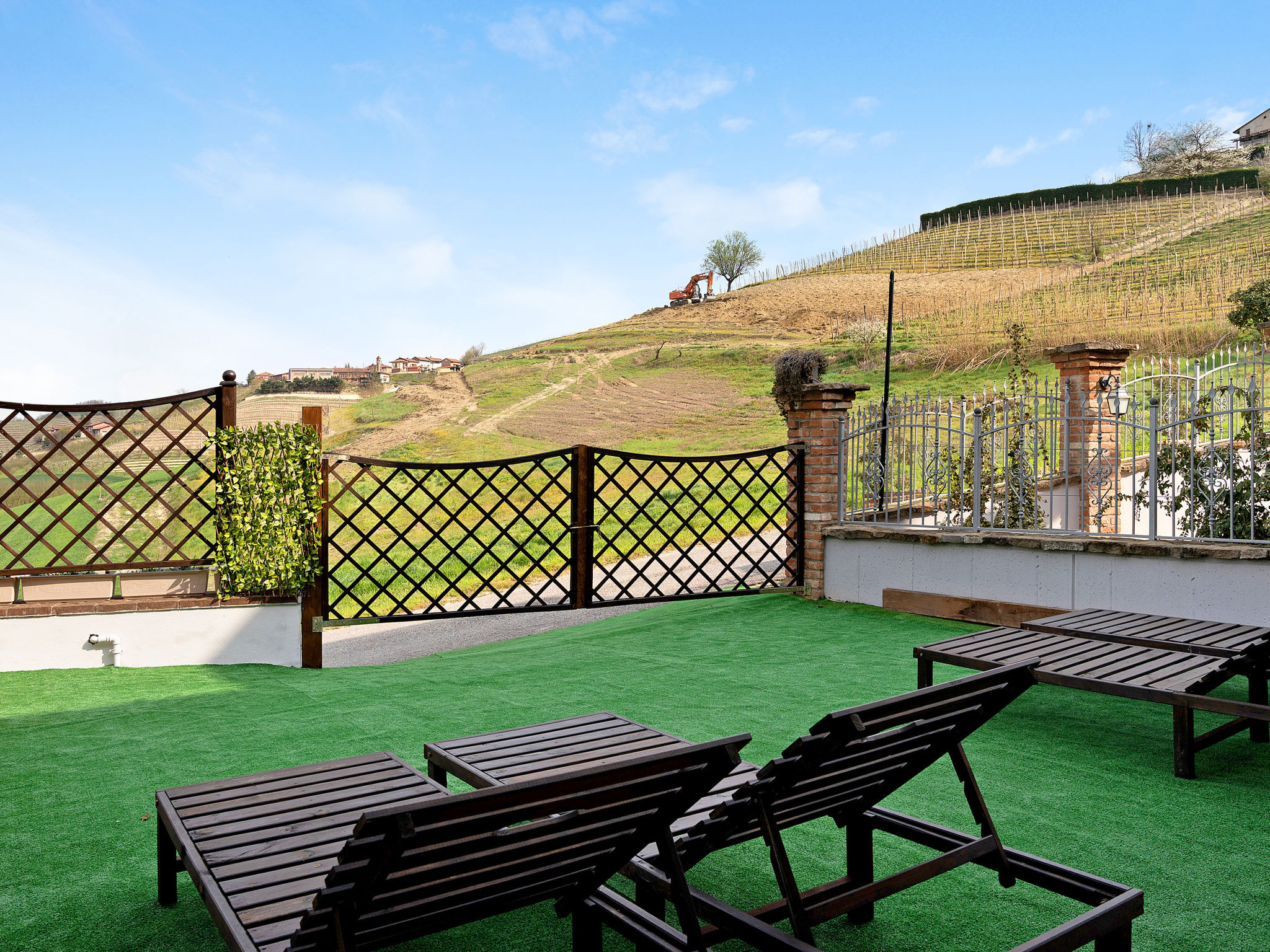
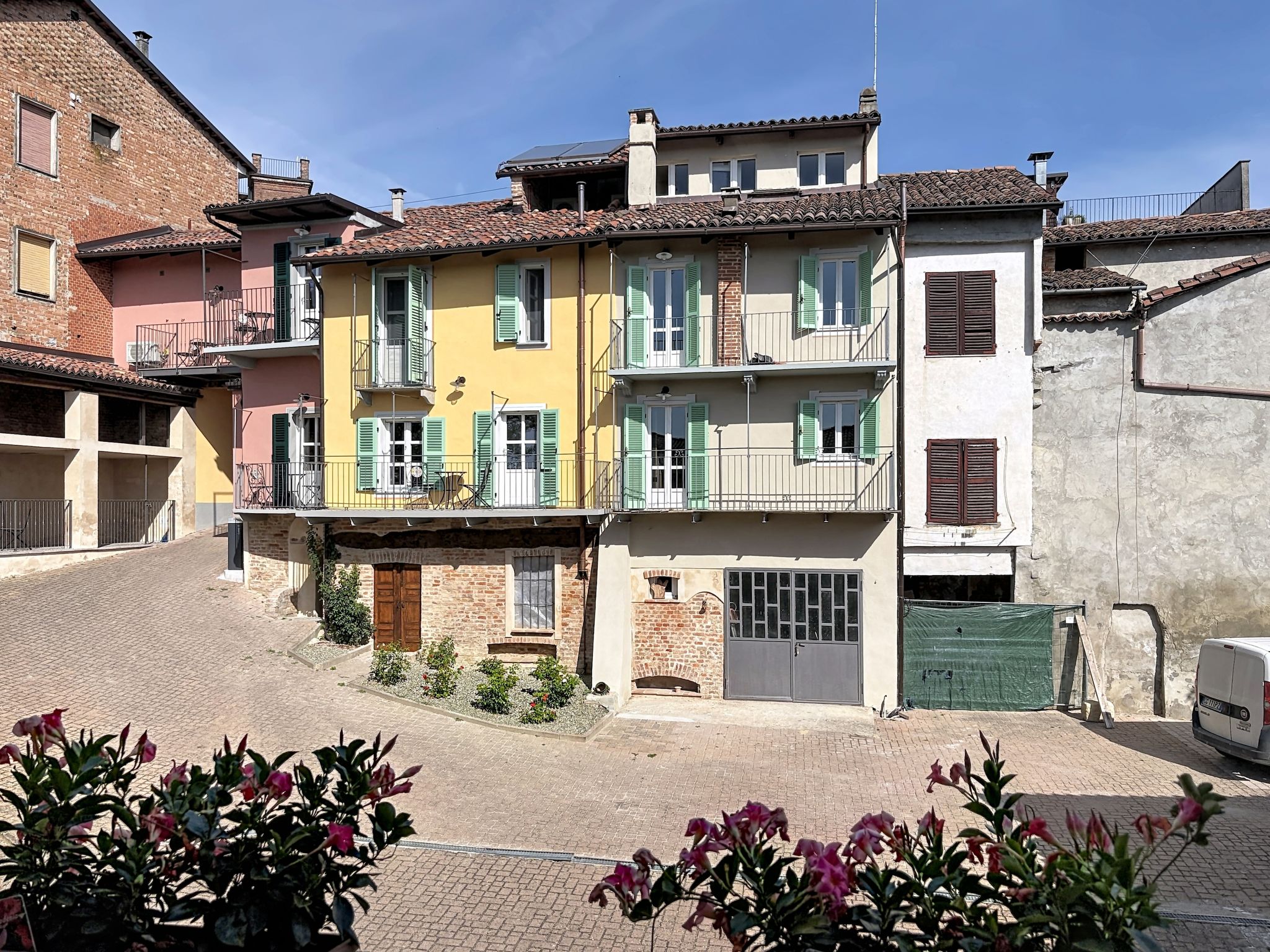
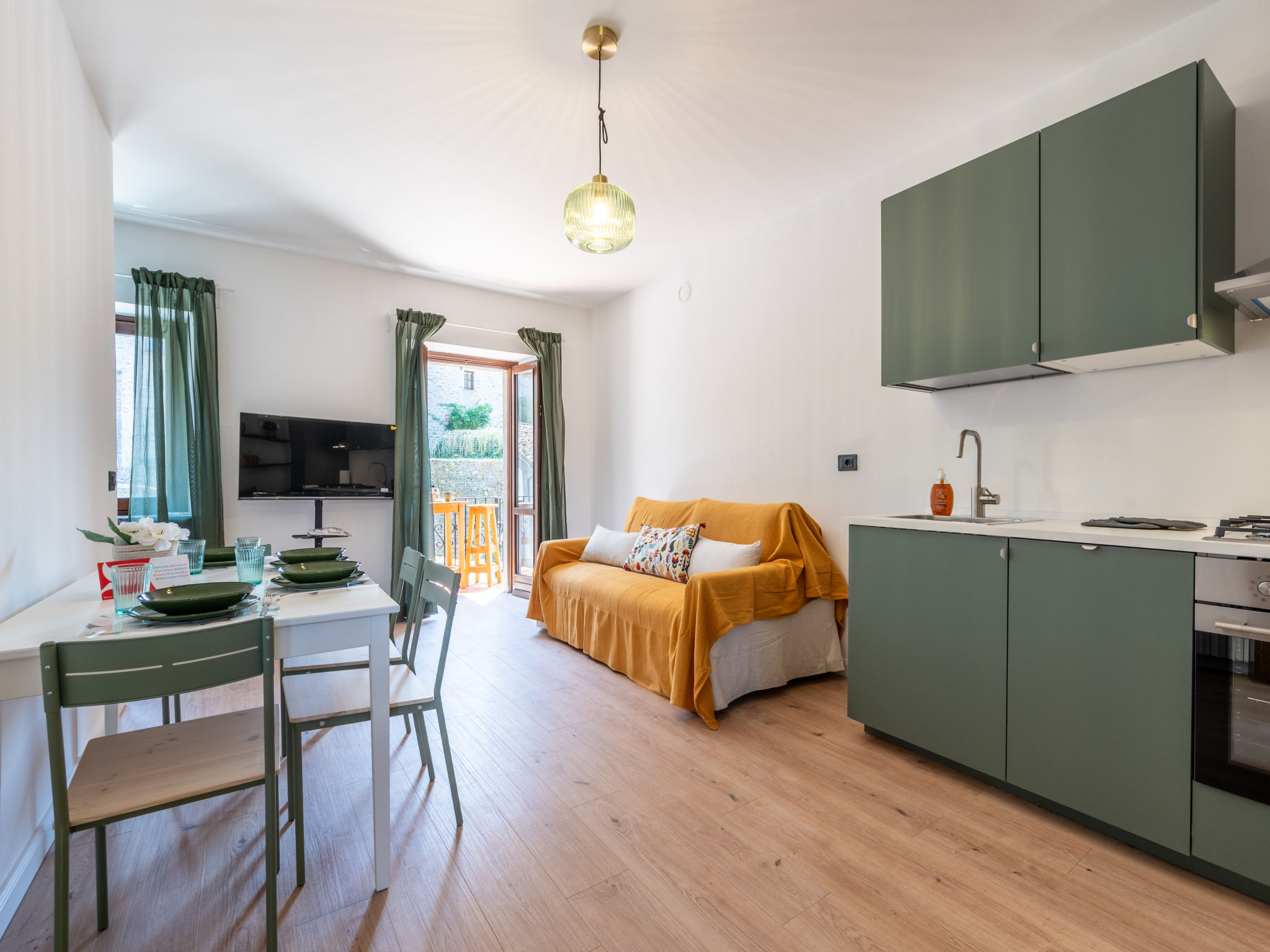
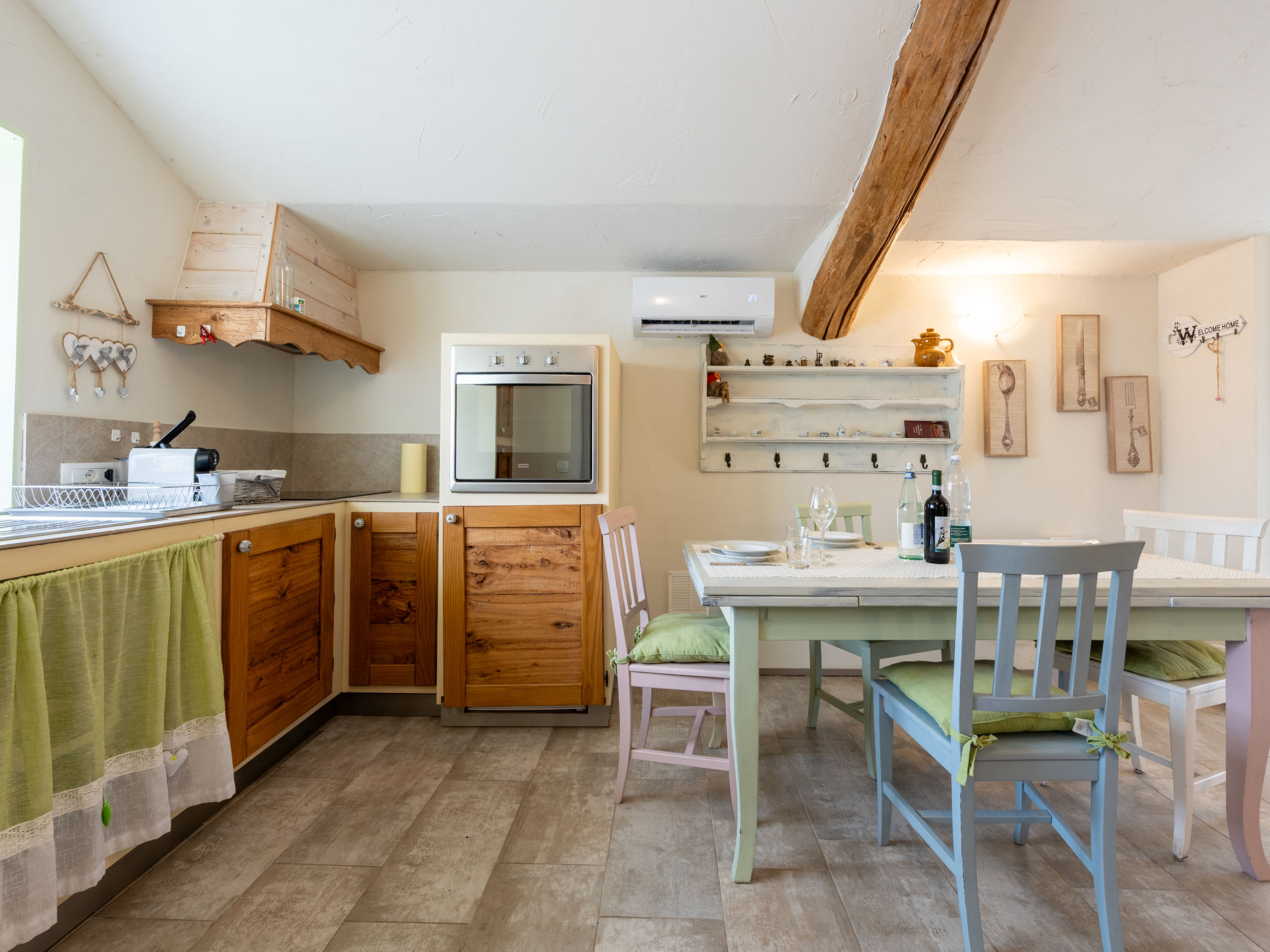
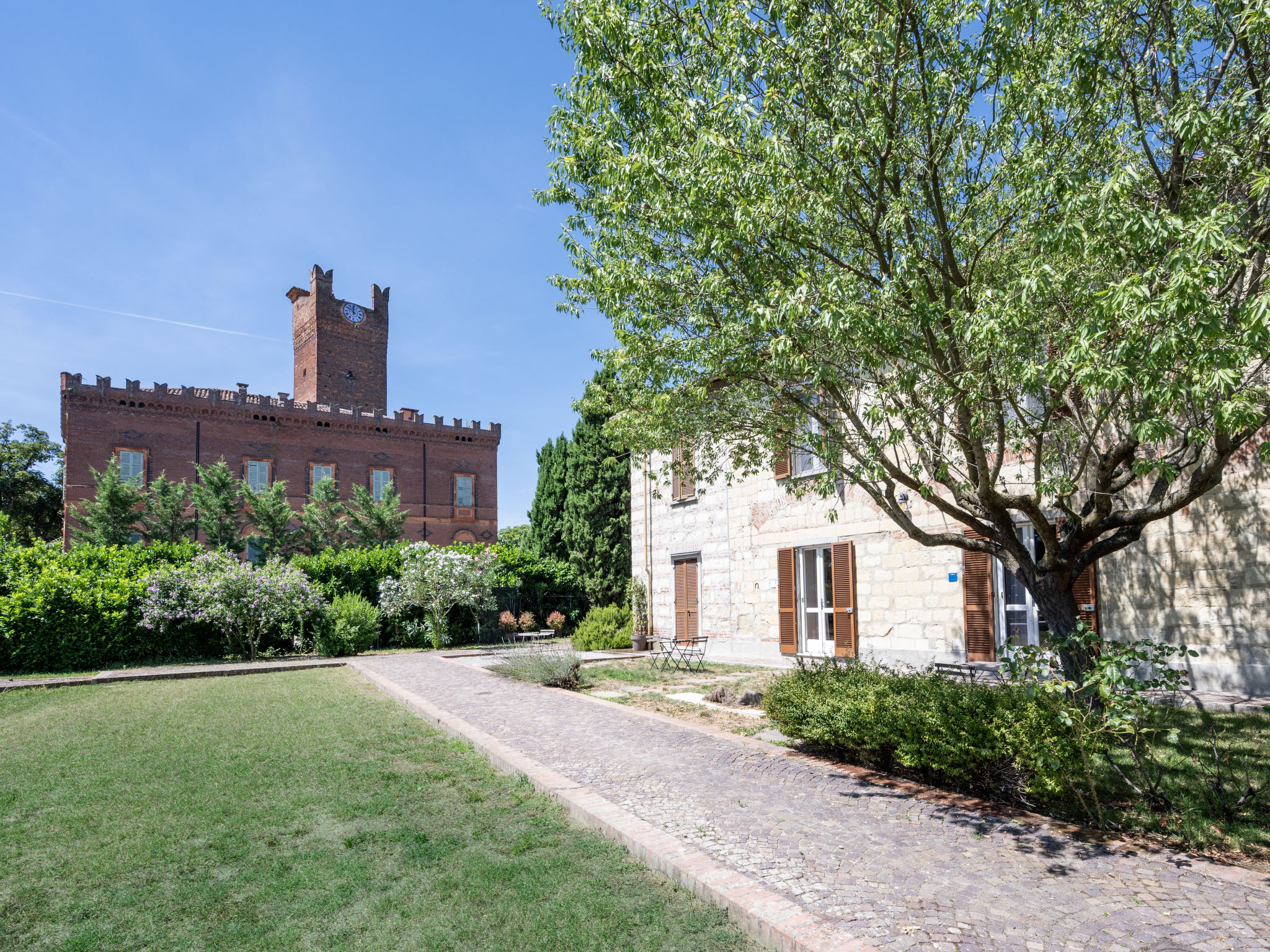
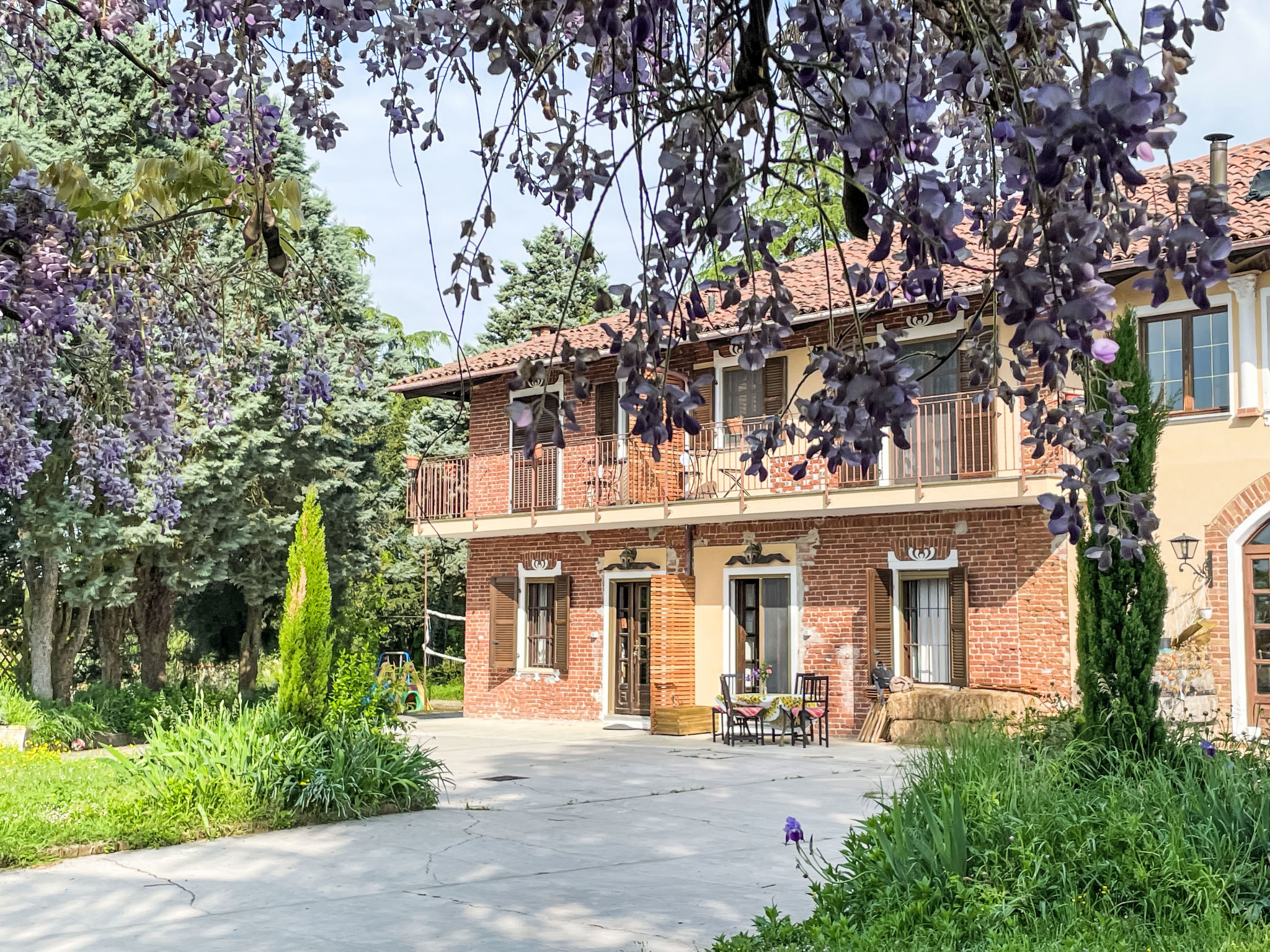
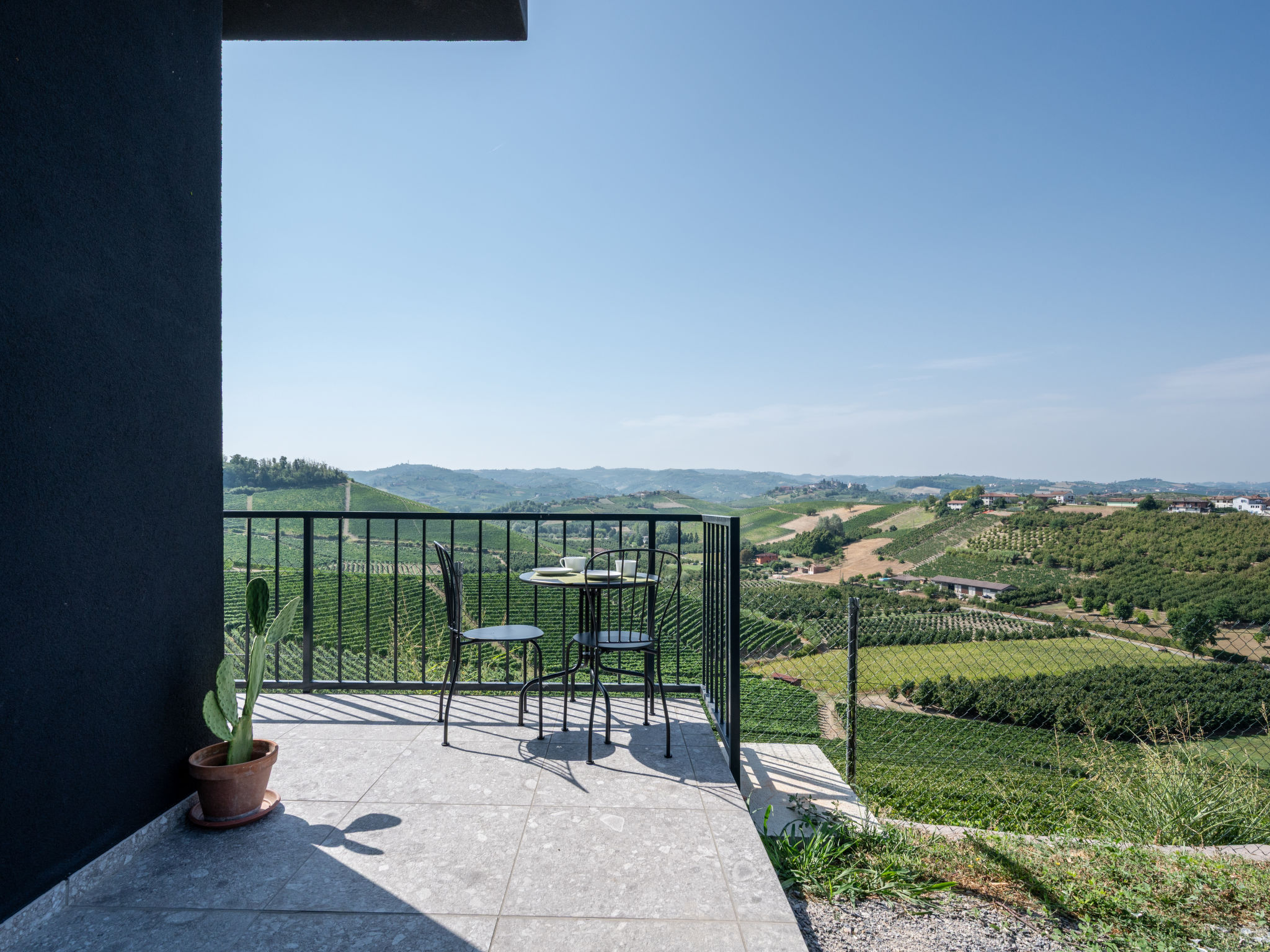
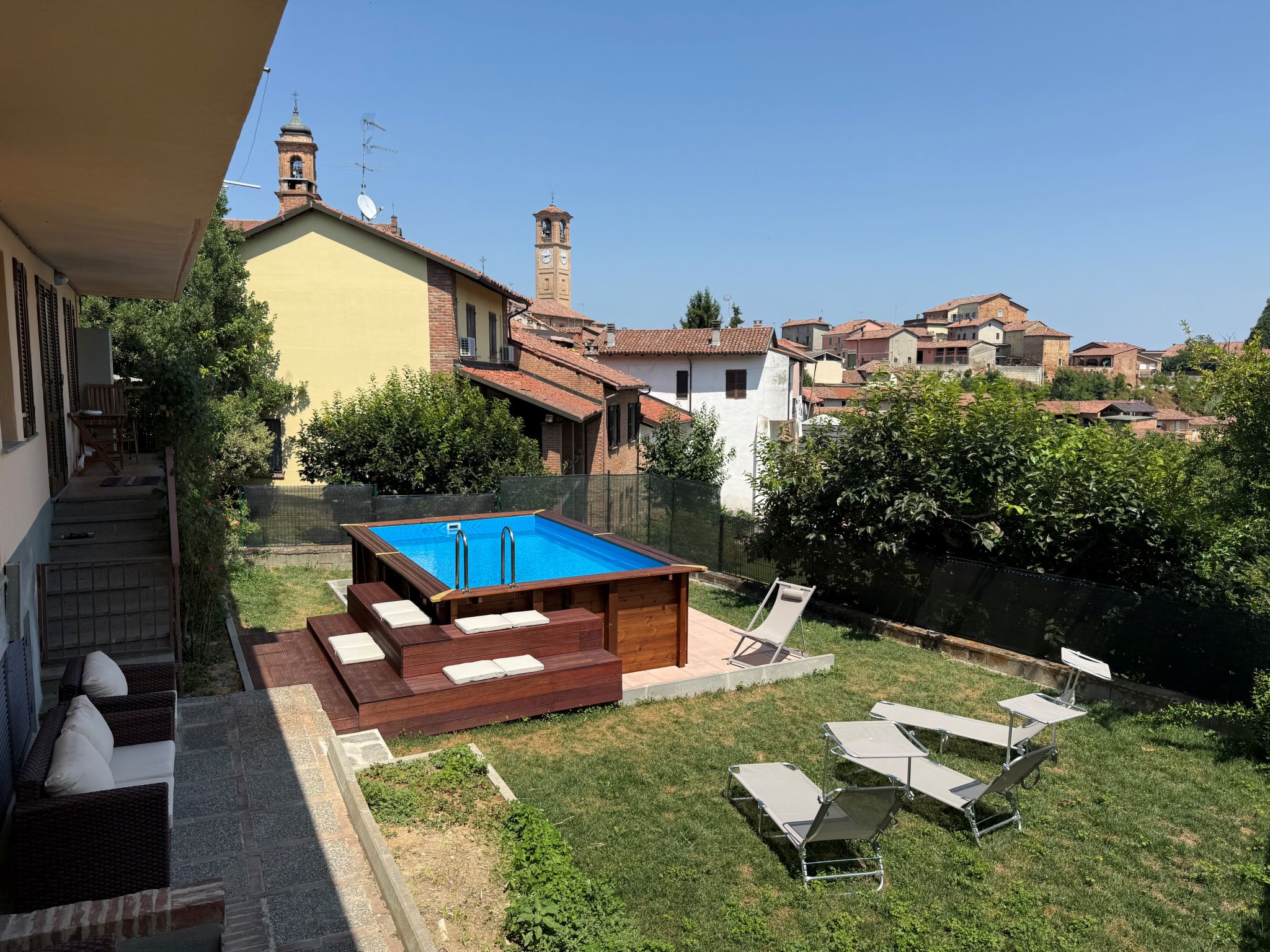
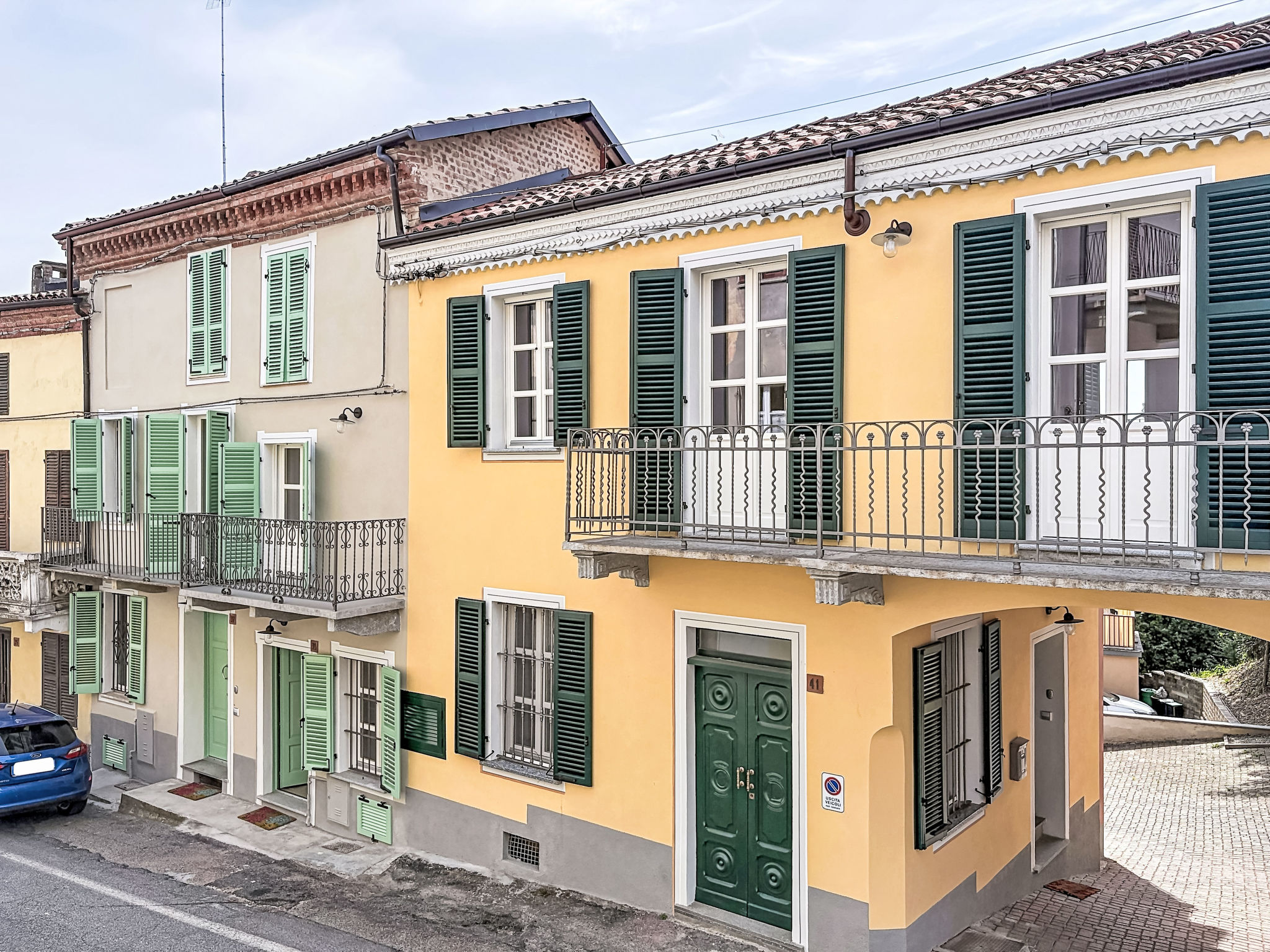
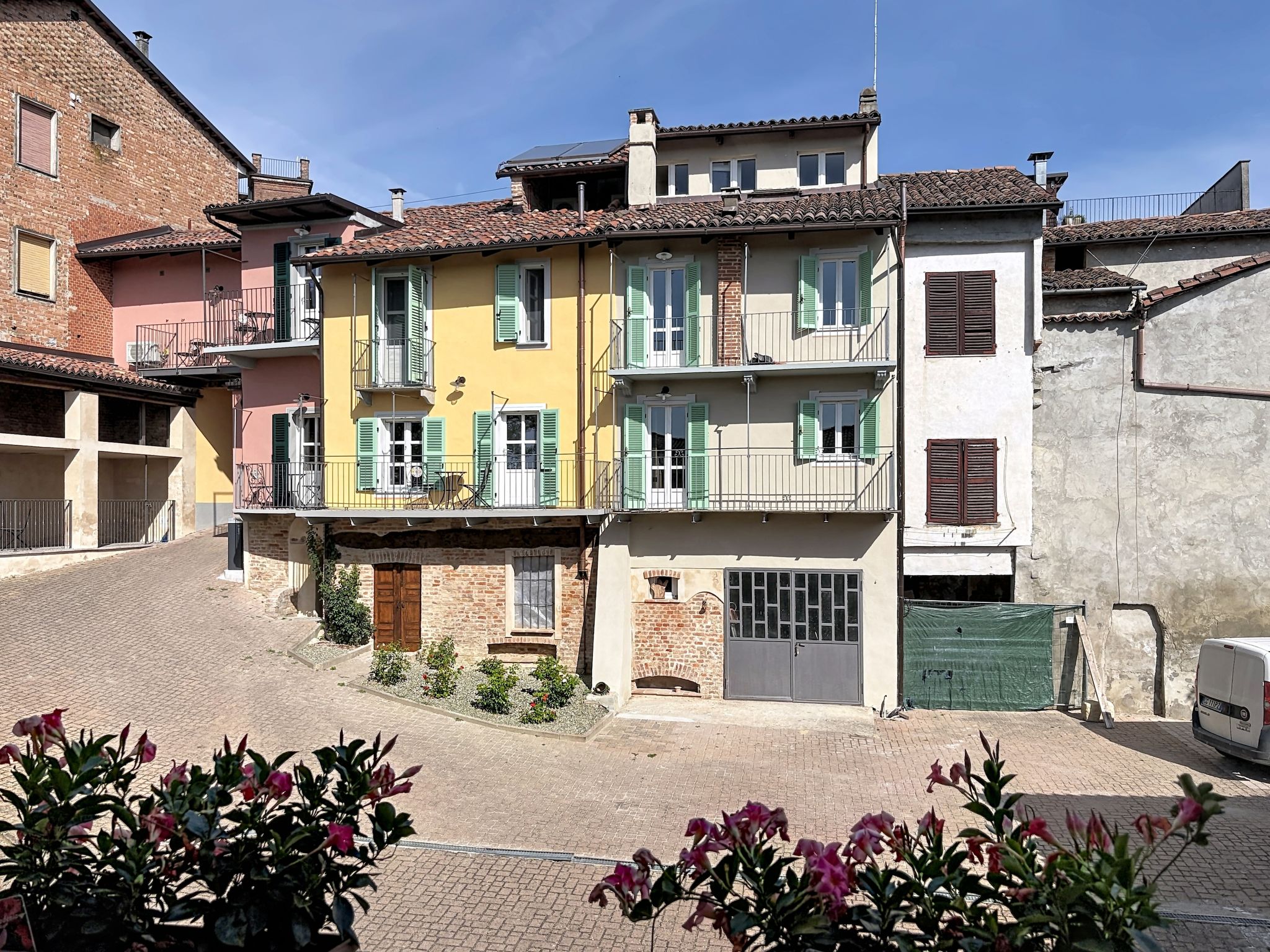
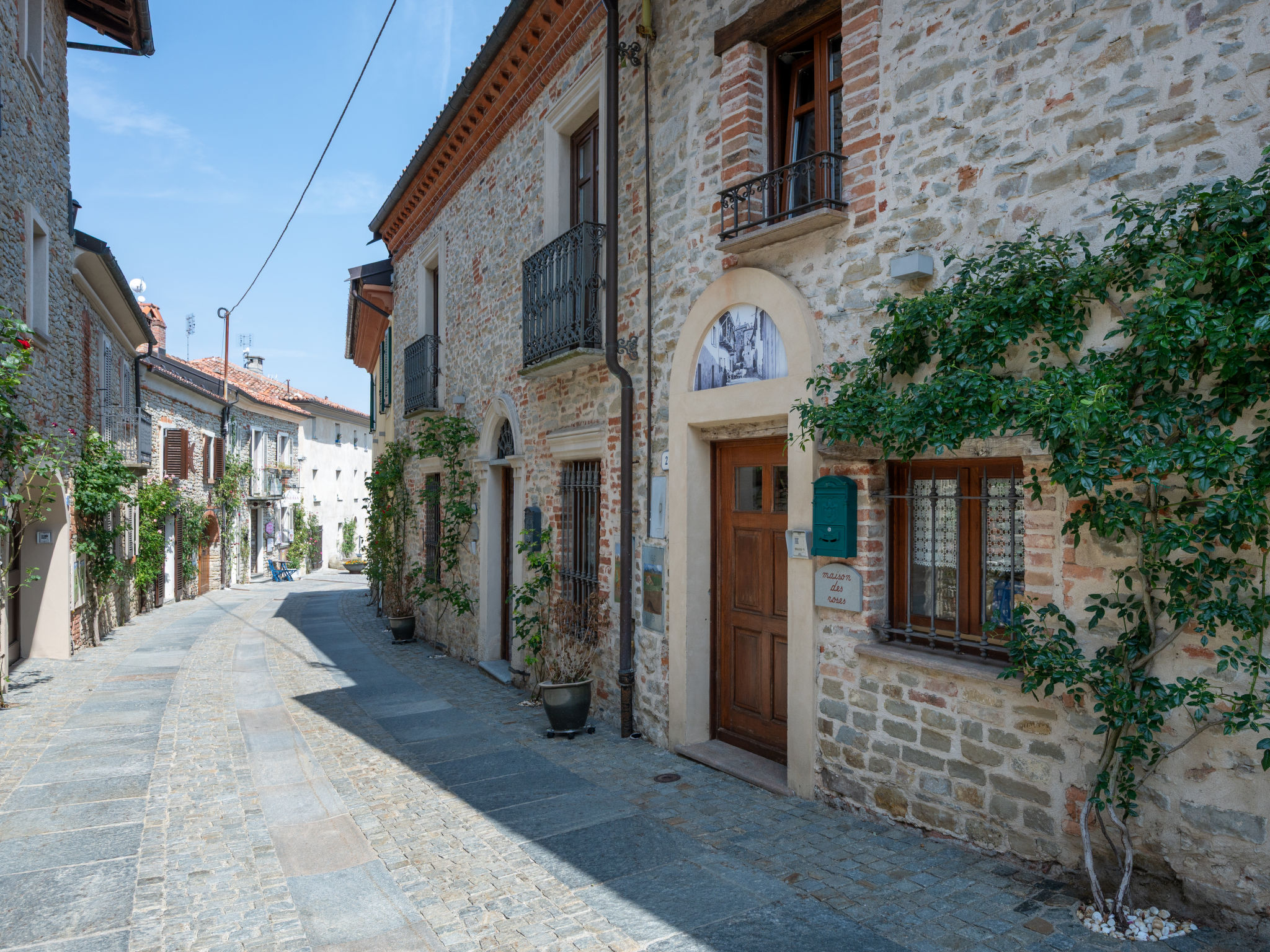
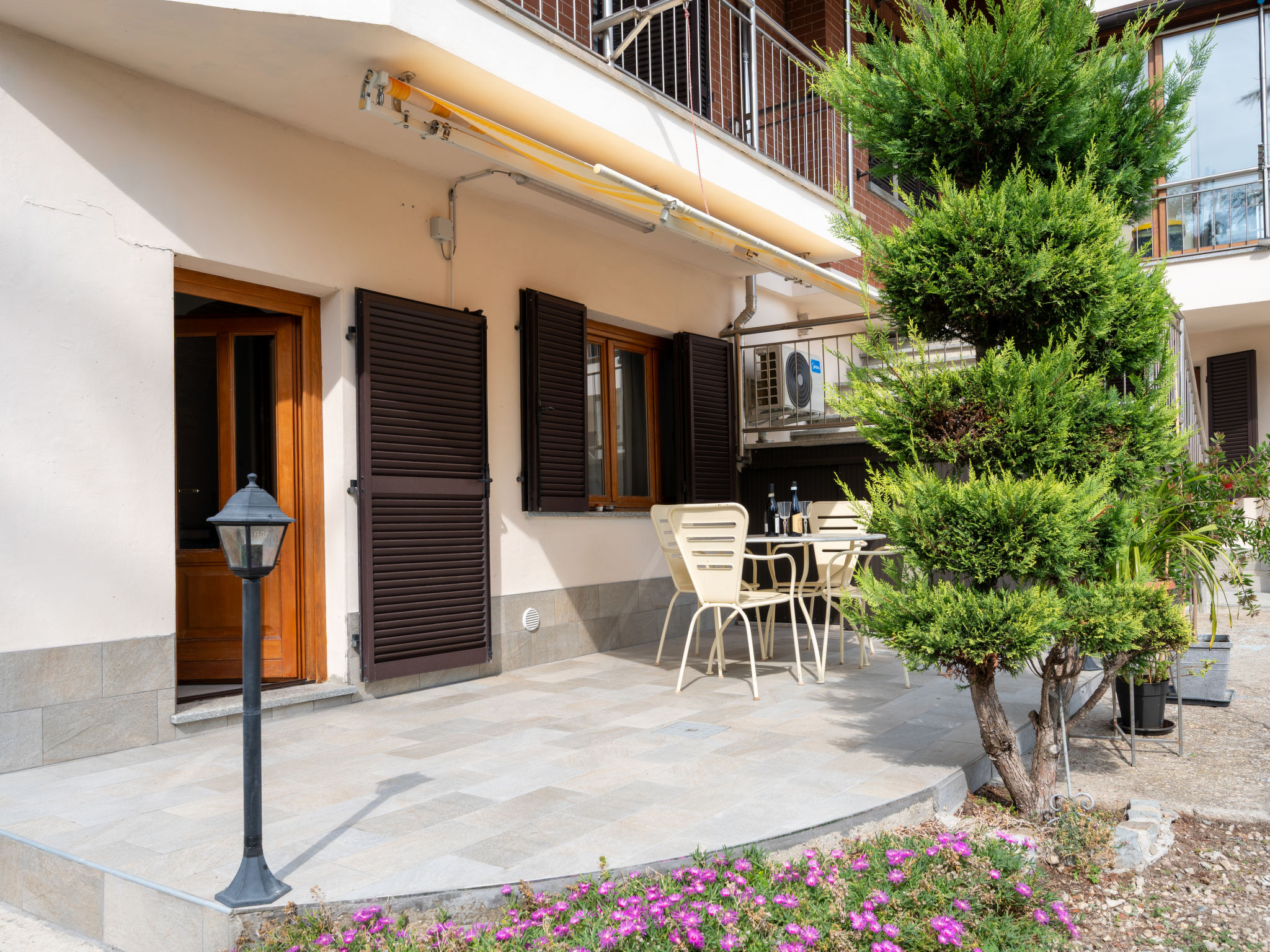
Asti and the Monferrato hills north of the city (Portacomaro, Castell'Alfero, Cossombrato, Castagnole Monferrato)
This is where most of our Piedmont houses are. Asti has a medieval centre of towers and a bareback horse race, the Palio, in September. North of the city, small villages such as Portacomaro, Cortazzone, Penango and Calliano sit on ridges of vineyards and woods, and Castagnole Monferrato is the home of Ruchè, a local red. Turin airport is around an hour and a quarter away.
Best for: Space, value and a real city within a short drive
Not for you if: You want Barolo and Barbaresco on the doorstep: Alba is 40 minutes or more away.
Alba, La Morra and Barolo (the Langhe)
Alba is the market town of the Langhe and hosts the white truffle fair on weekends from October into early December. La Morra has one of the widest views over the Barolo vineyards, and Barolo itself has a castle wine museum. Neive, north-east of Alba, is a hilltop village in Barbaresco country, and Monticello d'Alba looks across to the sandier Roero hills. Turin airport is about an hour and a quarter away.
Best for: Wine lovers who want the best-known Barolo and Barbaresco cellars
Not for you if: You are on a tight budget: this is the most expensive part of the region in autumn.
Between Asti and Alba (Costigliole d'Asti, Isola d'Asti, Castagnole Lanze, San Damiano d'Asti)
These villages sit on the low hills along the Tanaro valley, with Barbera vineyards on the slopes and Moscato d'Asti made around Castagnole Lanze. Costigliole has a large castle at its centre. Both Alba and Asti are around 20 to 30 minutes' drive, which makes this a practical base for seeing both. Cisterna d'Asti, in the Roero, has a castle museum of old crafts.
Best for: Splitting the difference between Langhe wine visits and Asti
Not for you if: You want a postcard hilltop village: some of these are working towns on the valley roads.
Nizza Monferrato country (Mombaruzzo, Castel Rocchero, Vinchio, Rocca d'Arazzo)
South-east of Asti, these are small farming villages in Barbera d'Asti country, with cantine sociali (wine co-operatives) selling direct and family wineries along the back roads. Mombaruzzo is known for its soft amaretti biscuits. Nizza Monferrato, a short drive away, has a covered market and the shops. Turin and Genoa airports are each around an hour and a half away.
Best for: Barbera wine and few other visitors
Not for you if: You want plenty of restaurants within walking distance.
The Alta Langa (Cortemilia, Bossolasco, Murazzano, Olmo Gentile)
The upper Langhe is higher, greener and much emptier than the Barolo hills. Cortemilia sits in the Bormida valley and is known for its hazelnuts, Bossolasco calls itself the village of roses, and Murazzano makes a sheep's milk cheese of the same name. Albaretto della Torre has a medieval tower above the village. Roads are slow and twisting; Genoa and Turin airports are both around an hour and a half.
Best for: Walkers and anyone who wants cooler, quieter hills
Not for you if: You mainly want to visit wineries: vines give way to hazelnut groves and woods up here.
Towards Mondovì (Bastia Mondovì and Narzole)
Bastia Mondovì and Narzole lie on the western edge of the Langhe, where the hills flatten towards the Alps. Dogliani, known for Dolcetto, and Carrù, with its winter beef fair, are close by, as is the old town of Cherasco. Mondovì's upper town is reached by funicular. La Morra and Barolo are around half an hour away; Turin airport is about an hour.
Best for: Combining Langhe trips with the Alps on the horizon
Not for you if: You want the classic vine-covered hills right outside the window.